Adenovirus and protein VII
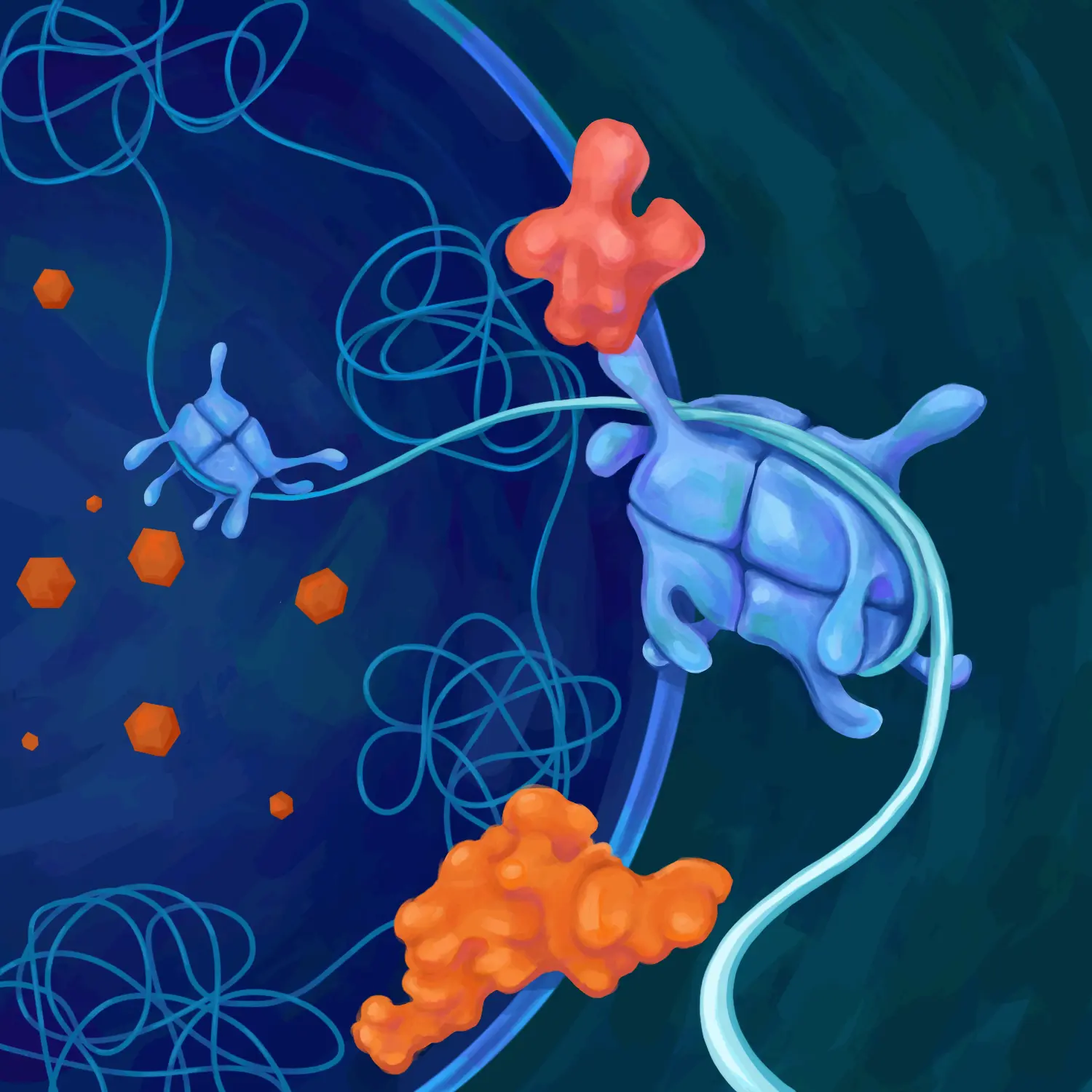
Much like the cellular genome, viral genomes must be compacted in virus particles with small basic molecules to maximize space and be poised for gene expression. Some DNA viruses use cellular histone proteins to compact their genomes whereas others use small basic molecules. Adenoviruses encode their own histone-like protein, called protein VII, that forms a ‘beads on a string’ assembly with the viral genome. We are interested in how adenovirus manipulates host chromatin through protein VII and more broadly how DNA viruses use histones or histone-like proteins for dual function: to compact their genomes and control host genomes.
Related Publications
Adenovirus protein VII binds the A-box of HMGB1 to repress interferon responses
Edward A Arnold, Robin J Kaai, Katie Leung, Mia R Brinkley, Laurel E Kelnhofer-Millevolte, Monica S Guo, Daphne C Avgousti
Human cytomegalovirus (HCMV)
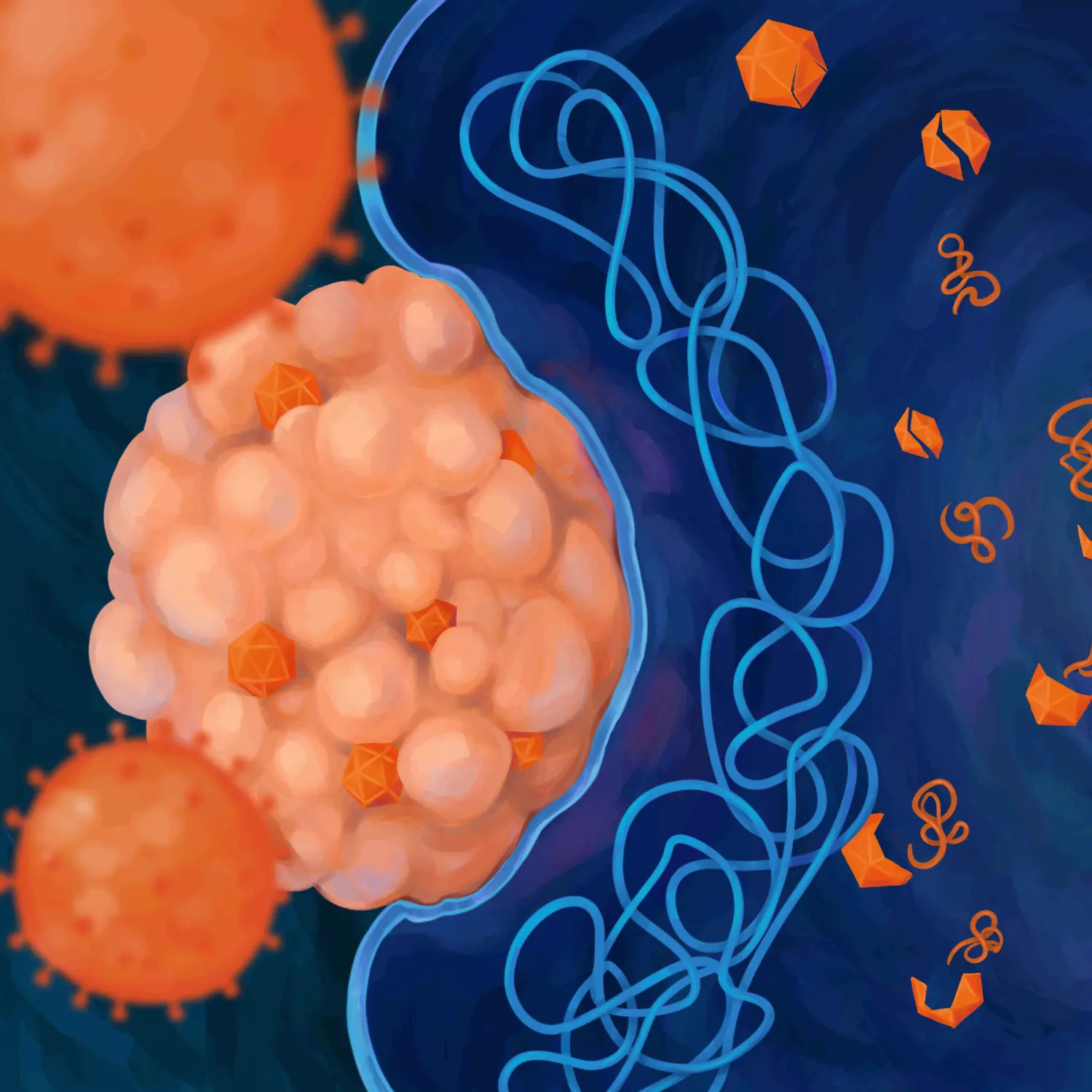
Human cytomegalovirus (HCMV) infection causes a unique disruption of nuclear morphology whereby the nucleus forms a kidney bean shape and physically rotates around a viral assembly compartment in the cytoplasm. This dramatic cellular change also causes host chromatin to become polarized such that heterochromatin is concentrated towards the cytoplasmic viral-induced assembly compartment (or vIAC). We are interested in the chromatin perturbations that underlie these dramatic nuclear changes and their impact on cellular function.
Related Publications
Human cytomegalovirus induces neuronal gene expression through IE1 for viral maturation
Laurel E. Kelnhofer-Millevolte, Julian R. Smith, Daniel H. Nguyen, Lea S. Wilson, Hannah C. Lewis, Edward A. Arnold, Mia R. Brinkley, Kihye Shin, Jin-Hyun Ahn, Eui Tae Kim, Katarzyna Kulej, Adam P. Geballe, Srinivas Ramachandran & Daphne C. Avgousti
Herpes simplex virus (HSV-1)
Herpesviruses incorporate histones on their genomes and regulate dozens of chromatin factors during infection. Herpes simplex virus (HSV-1) causes global chromatin disruption during lytic infection or reactivation, resulting in nuclear enlargement and striking marginalization of heterochromatin during infection. HSV-1 progeny capsids egress from the nucleus by a unique mechanism of budding into the inner nuclear membrane and then fusing with the outer nuclear membrane. We are focused on the chromatin perturbations induced by HSV-1 lytic infection and how the virus exploits these changes for viral gain.

Related Publications
Time-resolved Global and Chromatin Proteomics during Herpes Simplex Virus Type 1 (HSV-1) Infection
Katarzyna Kulej, Daphne C Avgousti, Simone Sidoli, Christin Herrmann, Ashley N Della Fera, Eui Tae Kim, Benjamin A Garcia, Matthew D Weitzman
Your work here
Are you interested in how viruses manipulate chromatin? Are you excited to discover unknown facets of molecular biology? If so, we’d love to hear from you!